
Lielahti Church
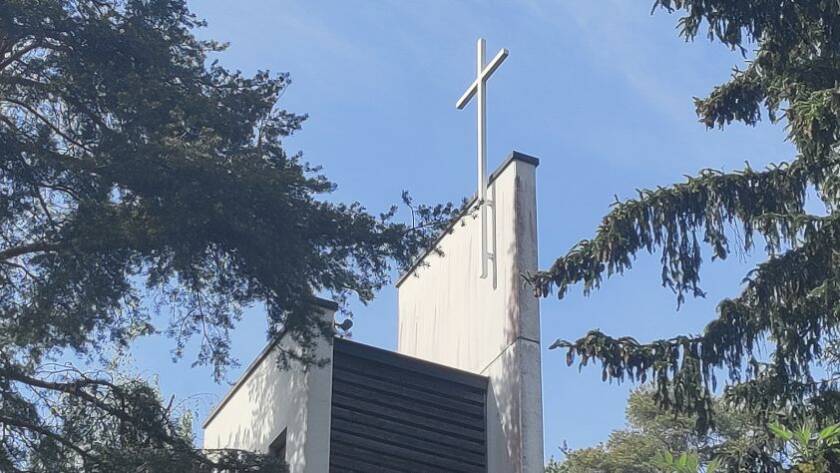
Lielahti Church is a red-brick neighbourhood church in western Tampere. Originally built as a parish centre, it was consecrated as a church in 1961 and is known for its bright, simple worship space.

Ollinojankatu 2, 33400 Tampere
Open during scheduled activities.
050 400 2108
church caretaker
Max 160 people
Accessibility
- Hearing loop: Available in the worship space.
- Step-free entrance: Located at the rear of the church, at the top of the hill. Vehicles can drive close to the entrance. The route has an unpaved natural surface. The entrance is around the corner through a glass door.
- Accessible toilet and baby changing station: Located in the entrance hall.
- Handrails: Available on the steps leading to the altar.
- Braille and large-print hymn books: Available from the church caretaker.
History
Lielahti Church is located in western Tampere, approximately seven kilometres from the city centre. The area is known for its industrial history: a pulp mill operated in Lielahti for many years, and today the area is home to small-scale industry, department stores and supermarkets.
Until 1950, Lielahti was part of Ylöjärvi. Parish life in the area was also supported by the Lielahti Prayer House Association from 1928 to 1954.
After Lielahti became part of Harju Parish, a parish centre was built on a site purchased from the Enqvist factory. Bishop Gulin consecrated the building as a church in April 1961.
Architecture
Lielahti Church was designed by architect Pentti Turunen. The red-brick building blends naturally into its surroundings and reflects the clear, functional design typical of 1960s church architecture. The worship space is bright and simple in design.
A small organ was installed in the worship space in 1991, helping to establish a more regular pattern of worship at Lielahti Church.
Altar cross
The altar cross was designed by architect Pentti Turunen. Made of oak in 1961, it forms the central symbol of the worship space.